Manual · The Art of War
Sieges and Engineers
Fortress assaults: the walled field, gates and battering, the prepared ram Engineers build beside your target's walls, and the keep that decides it.

How it works
The fortress field
Attacking a castle opens a fortress field: a wide, walled map with gates, interior buildings, and a keep yard. Walls and shut gates block movement and sight alike; a destroyed gate is a breach anyone may pass, and gate state is global — a gate the garrison opens admits attackers too.
The garrison may work its own gates; the attacker's only tool for them is battering. The defender's advantage is positional: cover on the wall, chokepoints at the breaches, and the keep at the heart.
Gates and battering
Marked gates carry a fixed integrity. A formation standing at a gate may spend its activation battering it, dealing damage that depends on the troop type: Footmen and unequipped Engineers work honestly, cavalry batter poorly, and Archers cannot batter at all. A gate reduced to nothing is breached and the way in stands open.
Battering obeys the same wounds math as combat — a battered crew swings softer. Every activation spent on timber is an activation not spent on the enemy, and the defenders on the wall are not idle while you work.

Preparing a ram
The battering ram is prepared before the assault, on the campaign map: an Engineer formation ordered to build beside an enemy castle. The order asks a fixed gold once — never refunded — and honest conditions: the crew's company beside the target, wages paid, no other work standing for crew or company, no development order conflicting.
While the build runs the company is frozen in place beside the walls. Work advances on owning turns, pauses if wages go unpaid, and finishes faster with an experienced crew — ranks shorten sieges; that is what Engineer ranks are. The moment the ram stands ready, the crew earns its one-time award of experience.
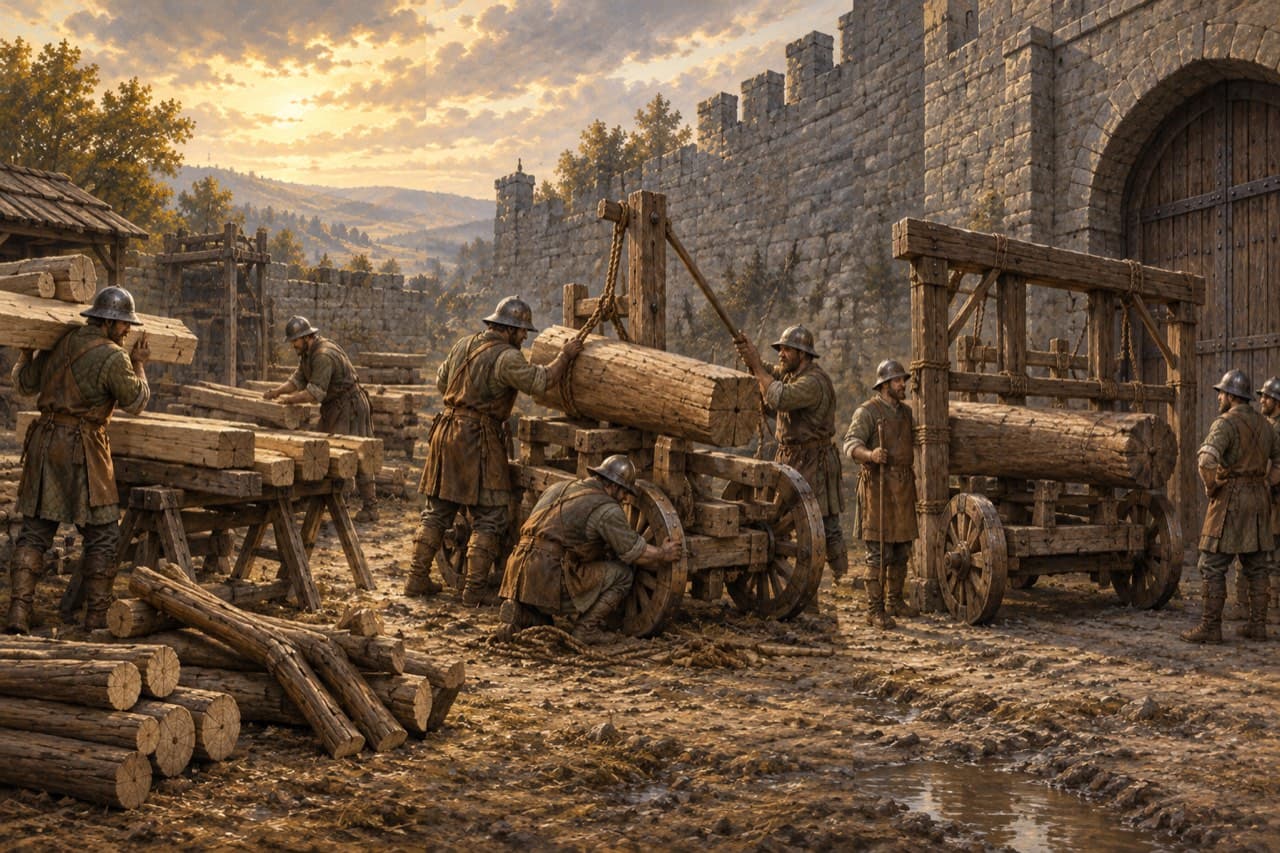
The ready ram
A finished ram waits beside the walls it was built against, bound to that castle. The crew stays mobile — marching away simply discards the ram, spent gold and all — and any battle that breaks out elsewhere interrupts other standing siege work. When your assault on that target begins, the preparation is consumed: the crew joins the attackers as one crewed ram formation, equipment and all, whether it deploys at once or enters later from the reserves.
The ram's edge is gates only: the crew strikes the timber far harder than its numbers suggest and fights troops exactly as the Engineers it is. Defenders never deploy rams, and a field battle receives ordinary Engineers.
The assault
The fortress objective is the keep yard: the attacker takes the castle by holding the yard through the defender's response. Otherwise the assault is decided as any battle — the last side standing, or a surrender.
The defender on its wall fights under cover; once the wall is crossed the cover is spent, and the courtyard fights as open ground with buildings in the way. The decisive moments of most assaults happen at the breaches, where the attacker's mass meets the defender's chosen ground.
Rules, exactly
Exact values from the current build — not advice, not flavour.
- Fortress field
- 19×13 hexes — walls, gates, interior buildings, and a keep yard to capture
- Gate integrity
- main 8 · postern 5 — structure damage points; a destroyed gate is a breach anyone may pass
- Gate battering
- 2 per activation (Footmen-grade) — a ram crew deals 4; archers cannot batter, and cavalry earn no charge against gates
- Wall cover
- +40% — for a defender attacked across the wall edge it defends from a parapet cell